
Hey, Charlie. The Restoration Counseling Newsletter printed another article by that old guy who always writes about alcoholics. What do you want to bet he goes on again about the high relapse rate?
Well, yes I do that, don’t I? To me the idea is unthinkable that you can talk meaningfully about alcoholism without talking about the high rate of relapse. It’s difficult to keep your mouth shut about something that breaks the hearts and ruins the lives of thousands of parents and wives and children and loved ones left behind by those who die, especially when death due to alcoholism is avoidable even when the disease is well established. Every alcoholic can choose to get well. Untreated alcoholism is a terminal disease, but only if the patient refuses wellness.
What cancer patient wouldn’t like to hear his attending physician say “you have a terminal illness which is going to kill you unless you would rather get well. If you prefer, you can get well and continue to live a long and completely normal, happy, healthy productive life.” What cancer patient wouldn’t jump at the chance and say sign me up!
We need to make it clear that now we’re talking about persons who initially choose to get well. Nine out of ten of these will return to alcoholic drinking within the first year of recovery. This occurs so consistently that many alleged experts have been led to conclude that relapse is an essential part of the recovery process and they say so publicly. For many alcoholics, however, it is the end of the recovery process.
So what’s the problem? If recovery is attainable, why so few victories? Let’s begin with what has been the most effective restorative effort in the past 90 years; that is, Alcoholics Anonymous. The program prescribes 12 steps that lead to a personal transformation—a renewal of the mind—a spiritual awakening to the sober life. The steps begin with the acknowledgement that one is incapable of healing himself, and that a power greater than himself can and will restore him to sanity. This is followed by a decision to entrust his life to the higher power. There is a saying among members that the program works if you work it. When it doesn’t work the problem can invariably be traced to one of two things. Either the alcoholic and his higher power are not working together or his higher power is absent. Often the problem is due to a cloudy identification of this power.
To begin let us insert the word infinite. The importance of this word struck me one night during an AA meeting when an old timer announced that his higher power was his pickup truck. That prompted another to identify his hunting rifle, and I seem to recall a coffee pot being mentioned. These were the products of the AA policy of inclusivity which goes out of it’s way to avoid restricting membership to those of any specific religious persuasions. This leads to the assurance that each member is free to choose his own higher power.
I was left pondering the image of an out of gas F-350 beside the road with a dead battery on a cold winter night miles from home. To this day I remind myself — infinite power.
Because of the work I do I get to talk to a lot of people involved in various 12 step recovery programs. Whenever I come across one who is willing and open to talking about his recovery I ask him to tell me about his higher power.
I usually ask what his higher power is like, or if he’s a she. Is it a person? What do you call him, her, it? How do the two of you get along? Is he friendly? Loving? Angry? Patient? Forgiving? Gentle? How much time do you spend together? Do you talk to each other? Is he glad to see you? I rarely get this far before I’m interrupted.
Oh I see where you’re going with this. You’re talking about God; not a higher power.
And there we have the crux of the problem. With people who are prone to addiction in the first place we find a serious reluctance to consider God as a higher power or, as the step says, to turn one’s will and one’s life over to the care of God. This reluctance is rooted in what the addict has learned to expect from God. Often he has come to believe that God is angry, and the way to avoid being the target of anger is to stay as far away as possible. Moreover the alcoholic himself comes into treatment angry, and although he learns to hide his anger during treatment, he departs angry. It’s just a matter of time until the unprocessed anger surfaces. Then he picks up that drink when he has no one to turn to other than the God he habitually avoids or the vaguely identified higher power that nobody talked about during treatment.
The solution rests upon addressing two issues: the need to rewrite a life story in which the alcoholic learned that everyone from God on down is dangerous; and to orchestrate an encounter with the one who loves him with an everlasting love. What seems simple as capsulized here is maddeningly difficult because the alcoholic is powerless to make it happen. Also, whatever mental processes he might apply to his transformation are a composite of learned behaviors which psychologists call the ego and laymen call the false self. The word false says it all. He is faced with the impossible task of using his dysfunctional mind to renew his dysfunctional mind. The conflict manifests as resistance, and the patient unconsciously declines to follow treatment directives. The bottom line here is, of course, relapse. It doesn’t work when you don’t work it.
It’s imperative to process this phenomenon before it surfaces. This means the alcoholic should be aware of and understand the potential for resistance, and that further treatment is contingent upon his commitment to religiously [pun intended] complete all treatment assignments. This especially includes what he doesn’t want to do and anything he plans on doing later on if he has time. In every case he needs to say I’ll get right on it.
Reconfiguring one’s life story means disposal of the ego or false self. The way one acts is the result of what he believes, but this process has been in place and been repeated for so long that it is a habit, not something he does consciously or with intent. The alcoholic really doesn’t know what he is doing. He just does it. So we begin by training the brain to stop thinking and to maintain new points of focus.
As we look further at the term higher power we see that it appears in Step Two which refers to believing a power greater than ourselves can restore us to sanity. This is followed immediately in Step Three with a decision to rely on God. The change of terminology is not explained. Higher power does not appear again in any of the steps, but God is referenced in Steps 5,6,7, & 11 still with no explanation for the change. It looks like somebody quietly let God in through a side entrance, and he sits unnoticed in the back row.
Step Eleven reminds us to seek to improve our conscious contact with God. It also states the method of accomplishing this is through prayer and meditation. Basic meditation skills are effective in changing the function and the structure of neural pathways in the brain providing for changes in the way we think or as the apostle Paul said for the renewal of the mind.
With proper discipline and time invested, the meditation removes the false beliefs and maladaptive behaviors that have been hindering the much needed conscious contact with God. Included among the false beliefs is the idea that God is an angry, punishing monster who is just waiting for us to make a mistake. With the removal of the false self the addict is able to see clearly the true image of God. Author Thomas Keating, OCSO has put together a plan he calls Centering Prayer which is based on the traditional contemplative practices of the early desert fathers of third and fourth century Christianity and incorporates findings of current neuroscience. The program is nicely set forth in Keating’s book entitled Open Mind, Open Heart.
If some cold winter night I pass a pickup truck abandoned on a lonely country road, and the chill, whistling wind warns of more approaching snowfall, I’ll think about the driver on foot somewhere in the darkness and pray he makes it safely home.
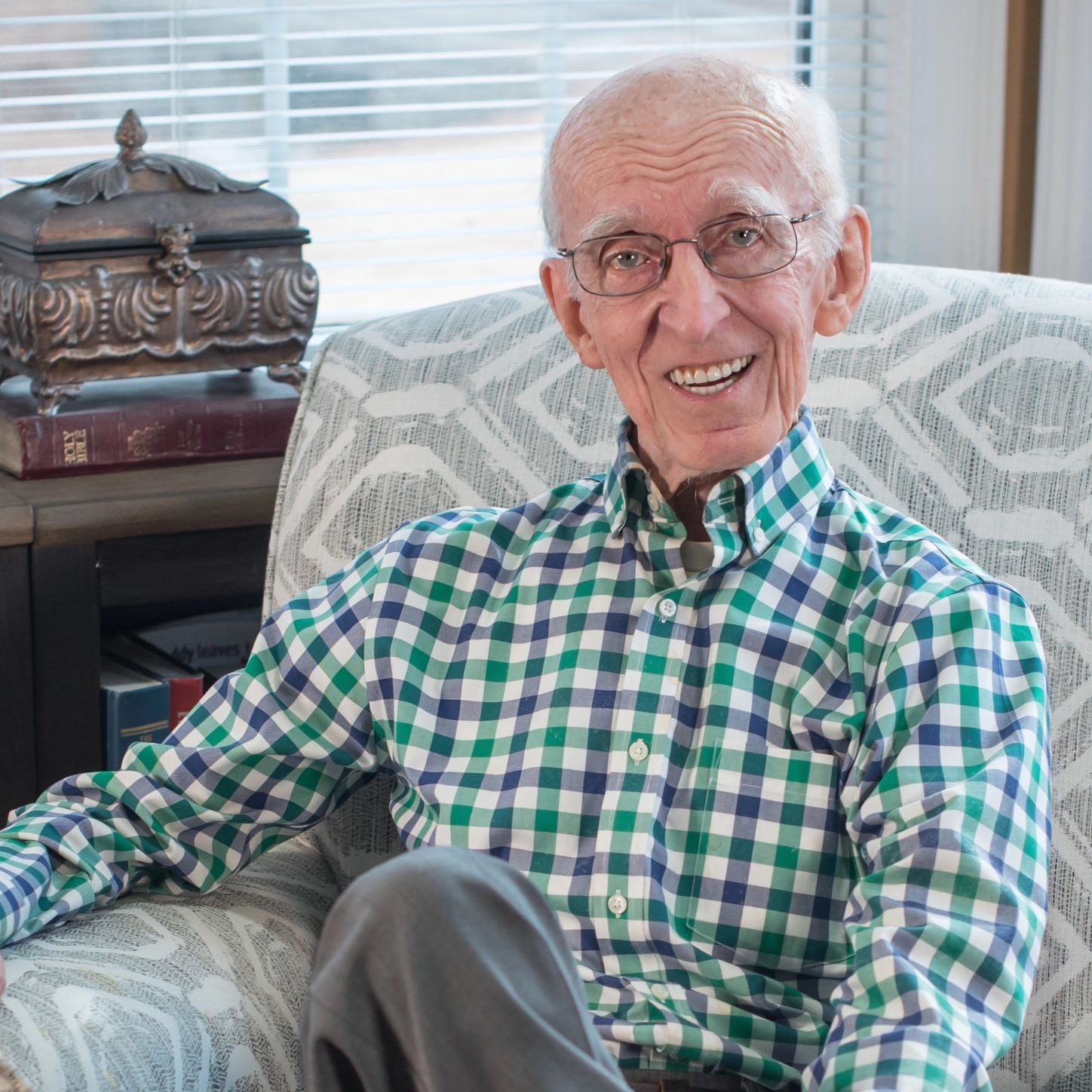
Written by: Patrick Caffrey, LPC
pat@restorationcounselingatl.com, ext. 114
Patrick counsels adults who struggle with alcoholism and other forms of substance abuse, as well as related family issues. These include adult children of alcoholics (ACOA) and persons who are codependent. Pat has also written and published three books addressing the subject of addiction. His books are available through www.amazon.com or may be purchased at the Roswell office.