
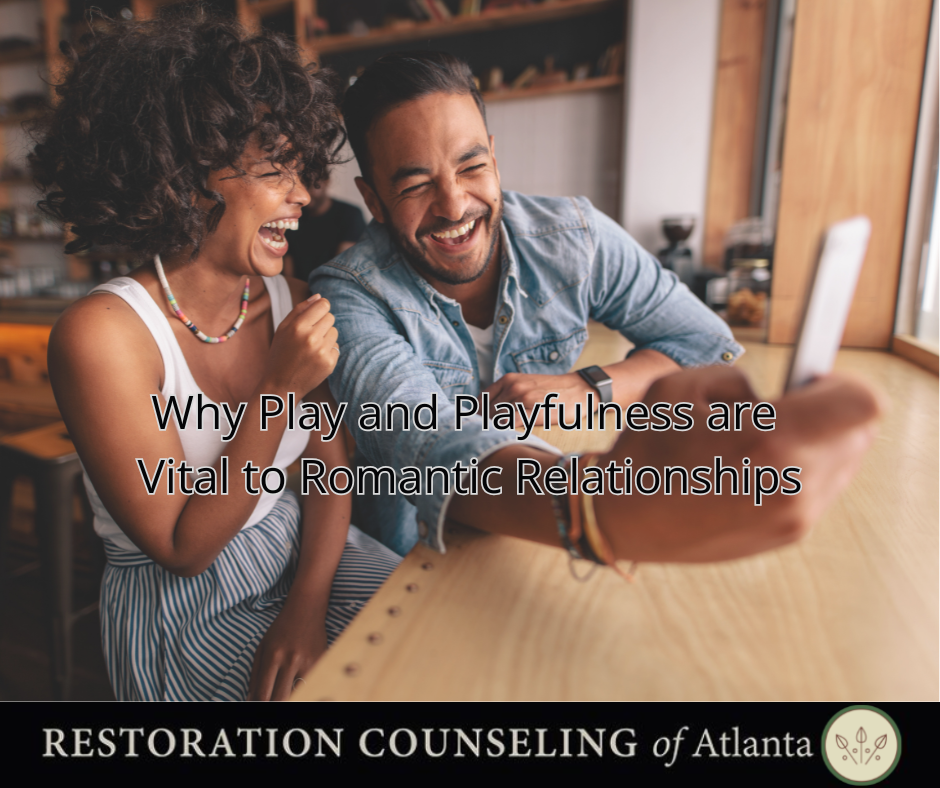
Romantic relationships do not thrive solely on seriousness. While covenants, commitments, and shared responsibilities are essential, play is often the hidden stabilizer of long-term relational health. From a neurobiological, attachment-based, and spiritual perspective, play is not peripheral; it is formative. It regulates the nervous system, strengthens attachment bonds, and repairs relational ruptures.
When couples lose playfulness, they often lose emotional safety. When they rediscover it, connection becomes accessible again.
Play and the Attachment Bond
Attachment science consistently demonstrates that secure bonds are built through consistent experiences of attunement, responsiveness, and shared positive affect. Play is one of the most efficient vehicles for creating those experiences.
Researchers such as John Bowlby and Mary Ainsworth established that secure attachment develops when a caregiver is both safe and responsive. [1] Their pioneering work on attachment science, the precursor to Emotion-Focused Therapy (EFT), popularized by Sue Johnson, provides a step-by-step process for couples to form or restore deep emotional bonds. [2]
In adulthood, romantic partners become primary attachment figures. Many individuals are unconsciously searching for emotionally corrective experiences from their partners. [3] In other words, you might be looking to your partner to fulfil an emotional need or gap that was present during childhood. This can drive you toward negative or reactionary behaviors. Again, some of these may be unconscious.
Play communicates three attachment signals:
- “I enjoy you.” (Delight builds secure attachment.)
- “You are safe with me.” (Laughter lowers threat response.)
- “We can recover from difficulty.” (Shared experiences through laughter build resilience.)
In couples therapy, one of the earliest indicators of healing is the return of spontaneous humor or shared smiling. Play signals relational safety. A simple smile can be the first response in regulating the nervous system.
Nervous System Regulation and Co-Regulation
Romantic relationships are not only emotional systems; they are biological regulation systems.
The autonomic nervous system constantly scans for threat or safety. When partners are in conflict, the sympathetic nervous system (fight/flight/freeze/fawn) or dorsal vagal shutdown (discussed later) can activate. In these states, problem-solving becomes nearly impossible.
Play activates social engagement circuitry associated with the ventral vagal complex [5], allowing for:
- Decreased cortisol (the stress hormone).
- Increased oxytocin (the hormone and neurotransmitter that is associated with bonding, building trust, and deep intimacy).
- Lowered heart rate
- Greater emotional flexibility
In practical terms:
When couples laugh together, tease gently, or engage in shared recreation, their nervous systems shift from protection to connection. Moreover, one of the benefits of couples therapy is borrowing the stillness of the therapist’s nervous system, which allows for coregulation. When properly deployed, playfulness can be instrumental in defusing conflict.
Play is therefore not trivial. It is regulatory.
As humans, we learn through emulation. If you have children and they experience frequent emotional constriction between their parents, what do you think that teaches them? What did you learn from watching your parents? Much of what we learn is caught as much as it is taught.
Relational Rupture Requires Relational Repair
Trust-Based Relational Intervention (TBRI), developed by Karyn Purvis and David Cross at Texas Christian University [4], emphasizes a central principle:
When trauma creates rupture, healing requires relational intervention, not control.
While TBRI is often applied in child welfare and foster care settings, its core framework translates powerfully to adult romantic relationships.
TBRI highlights three principles:
- Connecting
- Empowering
- Correcting
Notice the order: connection precedes correction.
In adult partnerships, when conflict arises:
- Criticism escalates the threat.
- Withdrawal increases insecurity.
- Control triggers defensiveness.
However, relational play, a soft tone, light touch, and shared humor can lower defensiveness enough to reestablish connection before addressing the issue.
Play functions as a connecting intervention. It says, “We are still us.”
Play After Trauma
Many adults carry attachment injuries from childhood, previous relationships, betrayal, or loss. Trauma narrows one’s emotional range and increases hypervigilance. Play broadens that range again.
Neuroscientifically, playful interaction:
- Expands tolerance for vulnerability
- Reduces rigid thinking
- Builds relational flexibility
In trauma recovery models, joy is not forgiving; it is reparative.
The Loss of Play in Mature Relationships
Couples often abandon play due to:
- Chronic stress
- Parenting fatigue
- Financial pressure
- Unresolved resentment
- Trauma activation
Without intentional restoration, relationships become transactional. Partners become co-managers rather than lovers.
When seriousness dominates, the nervous system remains in performance mode. Play shifts partners back into connection mode.
The Bible, Divine Delight, and Relational Joy
Scripture does not present relationships as bland contracts. They are embodied, joyful, and relationally alive.
Play as Delight
“He will rejoice over you with gladness; He will quiet you by His love; He will exult over you with loud singing.” — Zephaniah 3:17
God’s posture toward His people is not merely tolerant, but joyful. If divine love includes delight, human covenant love should reflect it.
Marital Joy
The Song of Solomon portrays romance not as obligatory, but celebratory.
“Arise, my love, my beautiful one, and come away.” — Song of Solomon 2:10
The invitation is relational, embodied, and playful.
Lightness of Heart
“A cheerful heart is good medicine.” — Proverbs 17:22
Modern neuroscience affirms what Scripture has long stated: joy heals.
Becoming Childlike
“Unless you change and become like little children…” — Matthew 18:3
Childlikeness includes curiosity, openness, and play. This is not immaturity, but relational accessibility.
Practical Relational Applications
Ingest Micro-Moments of Delight
- To operationalize play in romantic relationships, build up your collection of inside jokes. This allows you to focus on the world that you have or are in the process of creating together.
- Exercise light physical affection.
- Send playful text messages or share your favorite memes to move from micro-moments to longer stretches of relational delight.
Structured Play
- Have regular monthly date night. Some date nights can be simple, while some may be centered on novelty.
- Play games or engage in creative activities. There is no shortage of activities to do, but diversifying competitive and cooperative games to focus more on emotional connection rather than winning or losing is ultimately beneficial to the relationship.
- Share hobbies. Even if your partner enjoys something you find unenjoyable, attempt to accompany them and see if your participation lights up their world.
Repair Through Softness
After conflict:
- Use gentle humor (never sarcasm)
- Soften facial expression and tone.
- Make brief physical contact if safe.
Play does not avoid conflict; it lowers defensiveness, so conflict can be resolved.
Conclusion
From attachment theory to trauma-informed care to Scripture, a consistent theme emerges:
Relationships heal in the presence of safe, joyful connection.
Play:
- Signals safety
- Regulates biology
- Strengthens attachment
- Repairs rupture
- Reflects divine delight
In long-term romantic relationships, play is not immaturity. Rather, play is maturity expressed through secure attachment.
Playfulness in romantic relationships is not ornamental; it is structural. It reinforces attachment bonds, regulates nervous systems, and facilitates repair after rupture.
TBRI reminds us that relational wounds require relational healing. Scripture reminds us that love delights. Neuroscience reminds us that joy regulates.
When couples play with purpose, they protect their bond. Serious commitment may sustain a relationship legally, but shared joy sustains it relationally.
 Written by James E. Francis, Jr., EdD, APC
james@restorationcounselingatl.com, ext 118
James Francis has a heart for helping individuals struggling with anxiety, anger, church abuse, depression, family issues, grief, infidelity, life transitions, trauma, resilience, race-based issues, spiritual maturity, and pornography addiction. He prepares dating and engaged couples for lifelong love in premarital counseling, and guides married couples into building a better and stronger marriage. James keeps it real, believes in second chances, and loves to meet others where they are.