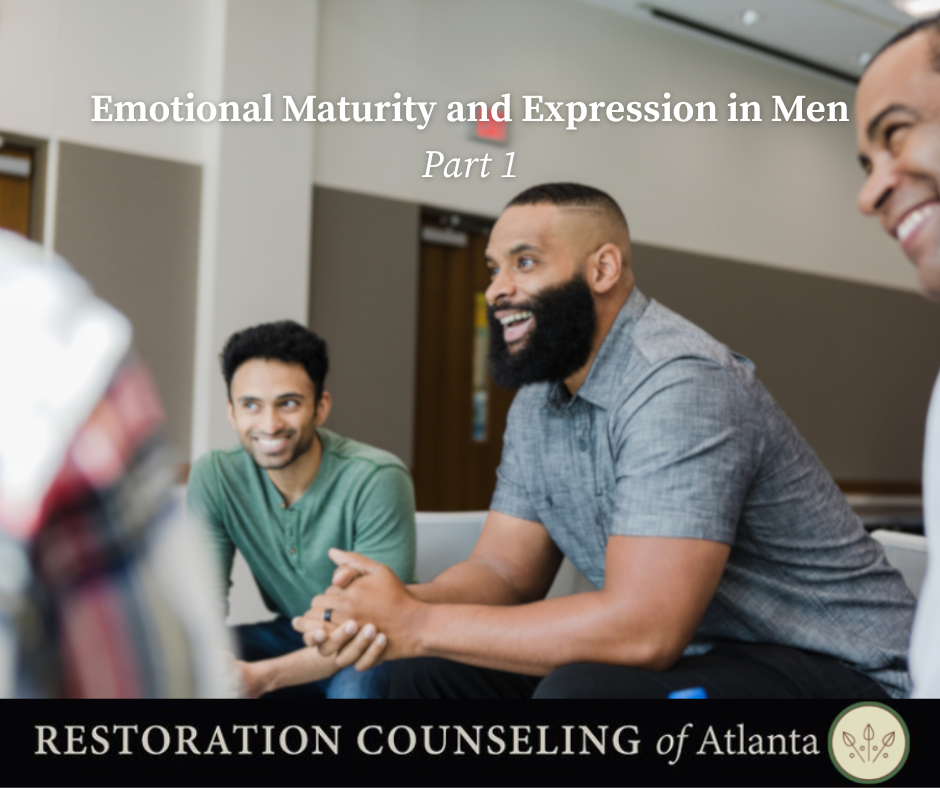
Part 1: Community and Connection
A man in isolation is dangerous. Without genuine connection, his desires will not only go unmet but will drive him to turn to whatever means possible to fill them. What follows tends to be more isolation and deeper relational distress. He will never truly be known and will ultimately rely on his own strength to provide for himself what only God and other people can provide. Whether the struggle is anger, anxiety, depression, identity, loneliness, lust, marital conflict, self-doubt, or shame, community will always be part of the answer.
“And let us consider how to stir up one another to love and good works, not neglecting to meet together, as is the habit of some, but encouraging one another, and all the more as you see the Day drawing near.” (Hebrews 10:24-25)
Whether the man is single or married makes no difference. In singleness, we should not rely solely on stoicism and solitude to become “self-actualized”. It sounds nice, but it is hopeless. True fulfillment cannot be found in oneself. In marriage, we cannot turn to our wives for every unmet need or insecurity, expecting them to meet every desire. It sounds romantic, but again, hopeless (not to mention a formula for resentment). True fulfillment cannot be met in another broken person.
We need true community.
A Biblical Model for Community
Using the basis of Scripture, 2 Timothy 2:22 says, “So flee youthful passions and pursue righteousness, faith, love, and peace, along with those who call on the Lord from a pure heart.” In our striving towards wholeness and fulfillment, we have been called away from doing so in seclusion. Why? Look at the life of Paul.
After his conversion, we see Paul achieve many courageous acts of faith and display amazing endurance. He suffered beatings, imprisonment, and being stoned, all while supporting the Church and proclaiming the Gospel. He also states that he was seen as weak in appearance and speech (2 Corinthians 10:10), as well as afflicted by a “thorn” in his flesh (Corinthians 12:7).
Why was Paul able to accomplish so much despite his weakness? Paul traveled with men like Barnabas, Silas, and Timothy, to name a few, who shared his goal in reaching the people and serving the Church for Christ. Paul openly acknowledged his imperfections and modeled healthy interdependence, which was vital for his ministry. Paul knew the value of brotherhood (as well as some healthy competition) and encouraged Christians to “Love one another with brotherly affection” and “Outdo one another in showing honor” (Romans 12:10). Paul, like you and I, was a relational being, and he was aware that his skill and knowledge would have failed him had he been alone.
Community in an Isolated Age
When I talk about community, I often get the response “That sounds great and all, but where does that exist?” My first answer is the Church. Yes, the Church is made up of broken individuals like you and me, but its purpose is, as the Westminster Confession says, “for the gathering and perfecting of the saints.” Reach out to a trusted Pastor, Elder, or member and share your desire to be known in your community. Yes, it may be uncomfortable, but it is necessary for fulfillment and healing!
“Therefore, confess your sins to one another and pray for one another, that you may be healed. The prayer of a righteous person has great power as it is working.” (James 5:16)
Another source of this community is in your existing relationships. Be the exception to the rule and model vulnerability to your spheres of influence. Have discernment about who is safe and trusted enough to receive your need for connection. You will find that many others are looking for the same support.
For the married man, your wife can and should be a primary support in your life. In his book, The Meaning of Marriage, Tim Keller said it best, “To be loved but not known is comforting but superficial. To be known and not loved is our greatest fear. But to be fully known and truly loved is, well, a lot like being loved by God. It is what we need more than anything. It liberates us from pretense, humbles us out of our self-righteousness, and fortifies us for any difficulty life can throw at us.” Let your community aid you in fostering this love between you and your wife.
This is not easy to do, and it is in searching for community that most men tend to give up. If you find yourself in this spot, reach out for professional help. Counseling is a great resource for exploring and addressing the barriers that keep you from building this kind of community.
Conclusion
Your job as a man is not to be the “strongman” that everyone can lean on for salvation. Your job is to point them to the one who can, Jesus Christ. Could it be that your weakness is just as valuable, if not more so, than your strength in magnifying our Savior? Think back to Paul and his life. His weakness was not hidden or resented, but boasted in because he framed it through the lens of Christ’s strength.
No skeleton can be left in the closet. Your healing starts where your shame is. If we desire to be men who are resilient, strong, brave, honest, confident, and whole, we must first acknowledge this weakness and humbly rely on God. Let true brotherhood and connection be the grounds on which you drop your defenses, die to self, and live to Christ. That is where strength is.
Books on Community
Life Together by Dietrich Bonhoeffer
Samson and the Pirate Monks by Nate Larkin
What is the Church by RC Sproul
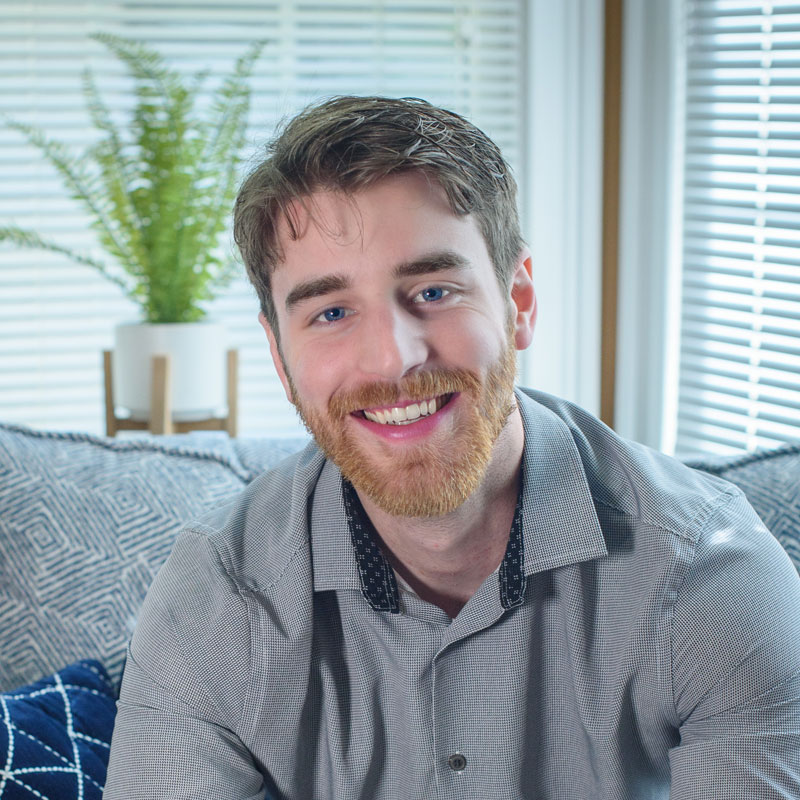 Written by: William Palmer
william@restorationcounselingatl.com; 678-534-3824, ext. 124
William Palmer (Roswell & Woodstock) has a passion for working with males of all ages who experience issues involving anger, anxiety, career, community, depression, identity, pornography, relationships, self-harm, suicidality, shame, spirituality, and trauma. He is also passionate about working with couples. He is trained in implementing Person-Centered Therapy, Cognitive Behavioral Therapy, Internal Family Systems, Emotion-Focused Therapy, and Play Therapy. He views individuals and their presenting issues through the lens of attachment theory, interpersonal neurobiology, and trauma-informed theories, all under the authority of God’s Word.