“In the beginning, God created the heavens and the earth… Then God said, ‘Let us make man in our image after our likeness…’ The Lord said, ‘it is not good for man to be alone;…’ Now the Lord said to Abram, ‘I will bless you… so that you will be a blessing’,” (Genesis 1-2 and 12:1-3).
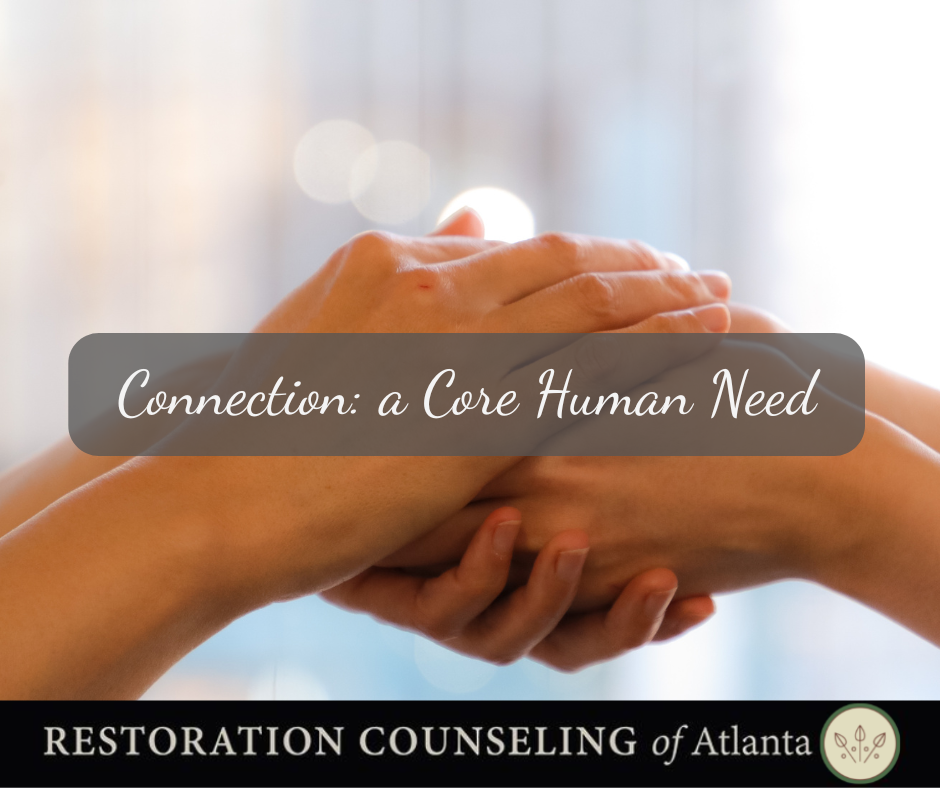
If you trace these stories from the opening lines of the Scriptures through the rest of the Bible, a clear pattern emerges: God is intimately connected to His creation, forming humanity in His image so they might live in relationship with Him and with one another and experience His blessing. Connection is not an afterthought. It is woven into the very fabric of creation and echoed throughout human history, revealing it as both a central theme and a universal need.
Yet in 2026, pursuing genuine connection with friends, neighbors, extended family, children, or partners can feel as daunting as climbing Mount Everest while starting from Atlanta, Georgia. The distance feels overwhelming, the path unclear, the risks intimidating, and the resources required seem far beyond reach. With endless distractions offering easier and more comfortable alternatives, many quietly wonder: why attempt something so complex? And, perhaps even more pressing, where would you begin?
Noticing & Naming
Babies are born with an autonomic nervous system wired to connect with a caregiver. This system of connection keeps the baby fed and protected. It becomes the internal map relied on throughout life, even as the signals of safety and danger, and the behaviors used to meet needs, evolve over time. Humans typically change and develop emotionally, mentally, and biologically throughout life. Our signals for connection gradually shift from the caregiver to peers, and from peers to deeper, more intimate relationships, including eventual romantic partners, without eliminating the ongoing need for connection from multiple sources. The way connection unfolds is shaped by our developmental stage as well as influences such as culture, generational narratives, and opportunity. In many ways, the study of biology and human development affirms what the Scriptures have long illustrated: connection is central to humanity.
However central it might be to our design, I imagine anyone reading this sentence can tell me a plethora of memories about how the taste of “connection” they’ve experienced has left a conclusion of, as the Kiwi’s say, “yeah nah, she’ll be ‘right.” Meaning, “I’m okay. I don’t need relationships if that’s what it is,” (Manhire, 2021). Connection is so important, yet so easily distorted. It can leave us all feeling isolated even in the most robust spaces. Relational titles do not equate to the connection we all crave by design, yet we can be so distracted. We let these disconnecting patterns play out for years until we’re so far distanced that it’s as if we’re again feeling like we’re in Atlanta, Georgia, attempting to summit Mount Everest.
The New Idea
What if we slowed down and made space to connect with ourselves, while noticing what keeps us distant from meaningful relationships? What if we could share that awareness with a safe person, and they responded more often than they missed it? How would it feel to live in a changing world, with unknowns, changing bodies and emotions, and growing responsibilities – while still feeling connected?
Science and the Scriptures both communicate that it would be like living by design, living genuinely and authentically. This takes many forms and, as annoying as it might sound, an undetermined amount of time. Repair follows a process. First, you notice what’s broken and name it. Then you imagine a way forward and prepare to try something new. You take intentional steps, reflect on what happens, and adjust as needed. And you continue investing energy into a path that may feel unfamiliar but offers the possibility of restoration. Thankfully, many have gone before us and offered ideas for small steps to take toward a more authentic/connected life. Below, I’ve outlined one of my favorites.
The Very Next Step
Connecting with yourself through a one-minute meditation can be the first step towards connecting with your partner, friend, or child (…or whomever has been coming to mind as you read). Try this 3-4 minute exercise if you’re able:
- Take a phone or watch with an alarm and set a timer for one minute.
- Close your eyes and begin controlling your breathing. Breathe in through your nose and out through your mouth, as you’re able. Breathe slower and more deeply. A typical pattern I use personally and with clients is: breathe in for five seconds, hold your breath for five seconds, and breathe out for ten seconds.
- Continue breathing, and if you notice your mind drifting, simply notice that and bring your focus back to your breathing pattern. You can also focus your mind on noticing your body. I typically try to notice my jaw, shoulders, chest, hands (how tightly I might be holding them or gripping something), stomach, and legs.
- After the time goes off, I spend another 30-60 seconds asking myself: was my mind running or still; what is my energy on a scale of 1-10; and what is my mood/emotion currently?
- Lastly, what do I need right now to be here and continue? Maybe movement—a walk or to stretch, maybe a hug, maybe something to drink/eat, etc.
- Reflect on how this exercise felt. Could you try this for one week and see how it works for you?
Connecting with yourself can give you insight into how to proceed with others. One of the things I love about my job is helping people feel more connected to themselves and their people. I love sitting with individuals and couples and slowing down their stories to notice where connection is happening and where it’s not. From this awareness, we can find pathways to connection and ultimately authentic living. Connection is central to our design, and I look forward to continuing to support people to live more genuinely. Please reach out if you would like to slow down and connect more in your relationships or if you have any questions about anything mentioned above.
Reference List:
English Standard Version Bible. (2001). Crossway Bibles.
Manhire, L. (2021). Master’s thesis: “Yeah nah, she’ll be right” : an attitudinal study of ‘yeah nah’ in New Zealand English. https://ir.canterbury.ac.nz/items/0326c278-a401-4db3-aefa-bd0bab96f6ff

Written by Samantha Mathews, MA, AMFT, APC, NCC, CMHC
Woodstock location

samantha@restorationcounselingatl.com
Samantha works with individuals of all ages. She wants to help create space and language for what you may be going through in life. Samantha sees individuals dealing with ADHD, anxiety, depression, gender issues, grief, postpartum depression, and trauma. She also does premarital and marital counseling.