A Gospel-Centered Vision for Counseling
A young man sits across from me, head down and eyes filled with shame.
Since adolescence, he has struggled with pornography. He has promised God countless times that he would stop. He has prayed after every relapse, read books, attended Bible studies, and listened to sermons. Yet here he is again, discouraged and wondering if anything will ever change.
A few hours later, a different client enters my office.
She recently discovered years of hidden sexual behavior in her marriage. Her world has been shattered. She cannot sleep. Her mind races constantly. She questions everything she thought she knew about her husband, her marriage, and even God.
These two individuals appear very different on the surface. One is carrying guilt and shame. The other is carrying grief and trauma. Yet both are suffering. And both remind us why Christian counseling must be more than simply adding prayer and Bible verses to traditional therapy.
For many years, the conversation surrounding Christian counseling has often been framed as a choice between theology and psychology, faith and science, spiritual care and clinical care. In reality, faithful Christian counseling requires both strong theology and wise clinical understanding. The issue is not whether we choose one over the other. The question is whether we understand each within its proper place under the lordship of Christ.
True Christian integration is not “Christianized therapy.” It is not sprinkling a few Bible verses into a counseling session. Nor is it reducing every struggle to a spiritual problem with a simple spiritual solution. Rather, Christian integration begins with a biblical understanding of what it means to be human.
Scripture tells us that every person is created in the image of God. Before we are addicts, victims, spouses, pastors, counselors, or strugglers, we are image bearers. This truth profoundly shapes the way we approach counseling. Every client who walks into our office possesses inherent dignity, worth, and value because they reflect something of their Creator.
At the same time, Scripture teaches that humanity is fallen. Sin has affected every dimension of life. Our thoughts, desires, relationships, emotions, and bodies all bear the marks of living in a broken world. This means that counseling cannot simply focus on symptom relief or self-improvement. People need more than coping skills. They need redemption.
Yet the biblical picture of humanity goes even deeper.
Human beings are embodied souls. We are not spirits trapped inside physical bodies. God created us as integrated beings whose physical, emotional, relational, and spiritual lives are interconnected. This reality helps explain why trauma affects far more than a person’s thoughts. Trauma impacts the nervous system, emotional regulation, relationships, sleep patterns, and even a person’s experience of God’s presence.
Some Christians have viewed neuroscience and trauma research with suspicion, as if these discoveries somehow compete with Scripture. I would argue the opposite. When properly understood, these findings often reveal the remarkable complexity of God’s design. Understanding trauma does not diminish our theology. It often deepens our appreciation for how fearfully and wonderfully God has made us.
This becomes particularly important when helping people navigate sexual addiction, betrayal trauma, anxiety, depression, or relational wounds.
For example, when a betrayed spouse experiences panic attacks after discovering hidden sexual behavior, it is not helpful to dismiss her experience as simply a lack of faith. Her body has experienced a genuine threat to safety and attachment. Her nervous system is responding exactly as God designed it to respond to danger.
Likewise, when a person struggling with addiction repeatedly returns to destructive behaviors, we must look beyond the behavior itself. We should explore the underlying wounds, emotional avoidance patterns, attachment injuries, distorted beliefs, and spiritual struggles that often fuel the cycle.
This is where Christian counseling differs from both secular reductionism and simplistic spirituality. We recognize that people are both sinners and sufferers. Sometimes, the counseling room contains profound examples of both realities simultaneously.
A husband may need to confront deceit, entitlement, and sexual sin while also exploring unresolved trauma, loneliness, and shame that contribute to destructive behaviors. A betrayed spouse may need trauma stabilization and emotional support while simultaneously wrestling with bitterness, fear, and questions about forgiveness.
Christian counseling makes room for both truth and compassion.
One of the greatest mistakes Christian helpers can make is attempting to rush people past their pain. Too often, individuals hear phrases such as “just forgive,” “pray more,” or “give it to God” before they have had the opportunity to grieve what has happened honestly.
The Bible itself provides a different model.
The Psalms are filled with lament. God’s people repeatedly bring their confusion, anger, grief, and disappointment before Him. Scripture never teaches us to pretend pain does not exist. Instead, it invites us to bring that pain into God’s presence.
This is why I often remind clients of a simple truth: The gospel does not bypass pain. Christ enters into pain.
Jesus did not remain distant from human suffering. He wept and grieved. He was betrayed, rejected, and suffered injustice. Because of this, Christian counseling should never minimize human pain. We can confidently enter difficult places because Christ has gone there before us.
This perspective also shapes how we use Scripture in counseling. The goal is not to weaponize Bible verses or provide simplistic answers. Scripture is not a tool for shutting down emotions or avoiding difficult conversations. Instead, God’s Word provides a framework for understanding reality. It reshapes identity, exposes lies, offers hope, confronts sin, and points people toward redemption.
Likewise, prayer serves an important role in counseling. Prayer is not magic, nor is it a substitute for clinical skill. Prayer is an expression of dependence. It reminds both counselor and client that ultimate healing comes from God. At the same time, prayer can also help regulate emotions, reduce anxiety, create a sense of safety, and strengthen a person’s awareness of God’s presence.
Healthy integration recognizes that prayer and clinical interventions are not competitors. They work together. In many ways, this reflects the larger goal of Christian counseling itself. We seek to address both sin and suffering, to care for both body and soul, and to combine truth and grace. We seek to use evidence-based clinical tools while remaining deeply rooted in Scripture. Most importantly, we seek to point people toward the hope found in Christ.
One of the most beautiful truths in counseling is that change is possible. Not because people possess unlimited strength. Not because counselors have all the answers or because therapy alone can transform lives. Change is possible because God’s grace is real.
The gospel declares that no one is beyond redemption. Addictions can be overcome. Marriages can heal. Shame can be replaced with identity. Trauma can be processed. Relationships can be restored. Wounds can become testimonies of God’s faithfulness. This does not mean healing is quick. In fact, most healing is slow.
Growth is often measured in small steps rather than dramatic breakthroughs. Yet Scripture repeatedly reminds us that God is faithful to complete the work He begins in His people.
As Christian counselors, our calling is not to fix people. Our calling is to walk alongside them. We listen carefully and speak truth graciously, while helping people understand both their suffering and their responsibility. We provide tools, structure, wisdom, accountability, and support. And throughout the process, we continually point them back to Christ. Because at the end of the day, Christian integration is not primarily about techniques. It is about a Person.
The One who enters broken stories, carries burdens, and heals wounds. Who restores what sin has broken. The One who makes all things new.
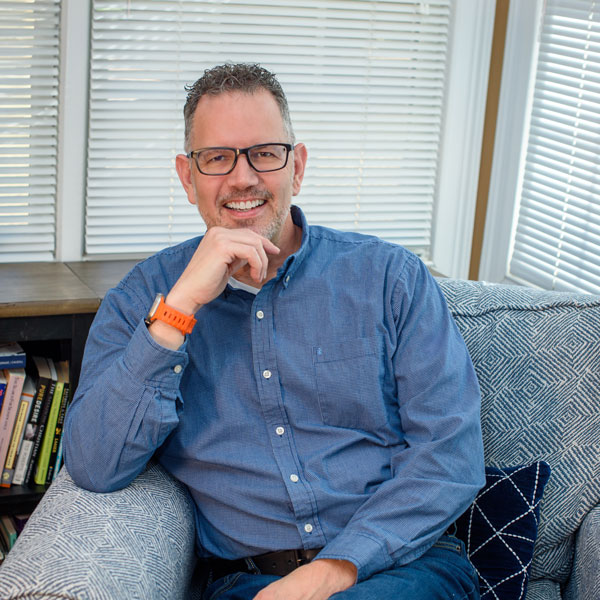
Written by Troy Snyder MS, NCC, LPC, CCSAS, CPCS
Roswell and Woodstock Locations
troy@restorationcounselingatl.com, ext. 113
Troy’s passion for working with sexually addicted clients has led him to obtain special certification in this study area. He is a “Certified Clinical Sexual Addiction Specialist” by the Christian Sex Addiction Specialists International (C-SASI, formerly IACSAS). He works with men and couples and takes a holistic approach to helping his clients by working closely with the parents, spouse, family members, and friends to help create a better foundation for success.