
Authors note: Pat is a recovering alcoholic who is happy to say that as of March 25, 2026 and by the incredible grace of God he has been drug and alcohol free for 50 years.
Every time I get it together, somebody moves it!
Learning about addiction frequently leads me to this lament. It started 50 years ago when well meaning misinformed persons assured me that if I accepted Christ I would get well. That promise flew out the window after I answered an altar call at a store front mission in Miami and went out and got arrested for public intoxication. The plan was revised to include quitting drinking, a proposal that lost credibility as I became increasingly unhappy, and others became increasingly unhappy with me; or so it seemed, as evidenced by one loss after another that ended in homelessness; then detox; and then relapse. I don’t intend to catalogue every change in plans in my search for wellness. Author and psychotherapist James Finley speaks of life as thousands of painful cul-de-sacs. Hopefully the point is made.
Every time I get it together, somebody moves it.
Come with me as I fast forward half a century to a time when advances in technology and the emergence of neuroscience as an branch of psychology persuaded me that at last I can put it together and no one will move it. Don’t make me laugh.
The discipline of neuroscience—the new kid on the block—appealed to a composite of beliefs we’ll call my ego. I believed that what my ego insists is true is true, despite the fact that many wise voices throughout history have cautioned that it can be less than trustworthy. I did concede that some of my beliefs might be incorrect, but what remained was the assurance that once I understood how things worked, I could get it together.
With a new view of the brain, and the emergence of technologies like functional magnetic resonance imaging that showed the brain in action, neuroscience uncovered a whole new perception (for me at least) of addiction as something due to a structurally disabled and dysfunctional organ that could be observed, identified, and its damaged parts repaired. Pursuit of this premise readily prompted neglect of the spiritual aspect that is essential to recovery programs such as Alcoholics Anonymous or the contemplative approach of Centering Prayer espoused by Thomas Keating. Although I willingly conceded that the central nervous system was designed by the Almighty, my attention remained with the science of it all now that I had something tangible to work with.
I found the chemistry of the brain compelling. Research indicated that the brain produces within itself and releases back into itself various chemical compounds which produce certain effects, and when the entire organism is intact and operates properly, the individual experiences physical, intellectual, and emotional well being. These compounds we call hormones and neurotransmitters, and one that the addict in me found most fascinating was dopamine.
At the risk of getting ahead of myself, I need to acknowledge that the above reference to well being fails to mention a noteworthy spiritual characteristic of the human condition. It overlooks how the central nervous system as it generates neurotransmitters and releases them back into itself mirrors the Trinity as it generates and shares love from Father to Son to Holy Spirit in a continual cycle. Let us make man in our image. (Genesis 1:26)
Now, back to dopamine. Not long ago, and until the present day in many cases, the word on the street was that dopamine was responsible for addiction. This was largely due to the fact that alcohol and drugs which are known to be addictive stimulate the release of massive doses of the transmitter into the brain and that these rushes were accompanied by increased feelings of pleasure. Pleasure was viewed as a reward for ingesting the substance and as a reinforcer of continued use. This partial view of the dopamine impact unfortunately overlooked evidence that dopamine affects other neurological functions essential to the learning process and mental health. Attention turned to managing dopamine pretty much as diabetics sought to manage sugar prior to the discovery of insulin.
And so the new plan focused on dopamine, the identified culprit along with anything substantial or with any activity that seemed to release it. The new plan to get it together was based upon the belief that dopamine is the source of pleasure, which meant pleasure is the source of addiction. Then somebody moved it (the plan), and the dry drunk entered the picture. This phrase describes addicts who are abstaining from substances but whose personalities remain unchanged. Because of this, others avoid the addict, and he finds his life devoid of joy which usually leads to relapse. In short, for such unfortunates it’s no fun being sober. So, back to the drawing board.
Current research that hasn’t yet fully become the word on the street indicates that dopamine may not directly cause pleasure but does play an important role in the development of addiction. Neuroscientist Kent Berridge posits that substances or behaviors that release dopamine produce a signal that says what you just did is good; remember it and do it again. In this way dopamine contributes to the processes of learning and memory that cause the craving so often associated with addiction. Coincidentally the process does release alternative transmitters that produce the familiar good feelings. Hence the system is rewarded for doing what is good for the individual, and when the system is working according to its intended design, we discover that all manner of things will be well.
A case in point would be the release of dopamine when a hungry person eats. Obviously eating is a good thing ensuring survival, and appropriately we are rewarded with pleasure for doing the right thing with repetition likely because eating is memorable as it is enjoyable. However, this doesn’t explain the development of eating disorders or food addiction, nor does it address the interdiction against sinful gluttony which is eating more than is needed or the prideful control of the anorexic seeking to overrule basic need for nourishment.
The difference between healthy eating and addictive eating can be found in the message do it again. We not only need to identify the behavior (eating), but the prevailing conditions at the time. The healthy eater eats when hungry. Addictive eating occurs in response to something other than the need for nourishment. If the learning process began with eating when distressed and the individual experienced the reward even though he wasn’t hungry to begin with, we have the reason the anxiety prone insomniac eats a whole party size bag of potato chips at bedtime and then raids the refrigerator looking for something else.
What’s a body to do? Mindful attention to circumstances that are present when the craving appears is necessary. Acquiring mindfulness calls for disciplined meditation practices. Additionally the individual will need to change his lifestyle; that is, he will need to rearrange his life around people, places, and things that are healthful stimulators of dopamine. He may have to forsake lifelong friendships, favorite haunts, and stop doing things he loves doing. That is to say he must relinquish that false self—a kind of death. Whoever loses his life will find it. (Matthew 10:39) Borrowing a statement from the Big Book of Alcoholics Anonymous: What an order!
A lifetime of doing things for the wrong reason and doing what we do only because it makes us feel good has probably clouded our minds so that we don’t even know what the next right thing is. Also, years of doing it my way have made us resistant to change. An expression among addicts who can be honest is: I want to get well, but I don’t want to change.
And so we come full circle to the point where we began this piece suggesting the need for acceptance and the acknowledgment of the need for a spiritual component in our lives. Those who fully accept Jesus’ invitation to follow him find that he’s pretty clear about what the next right thing is. When we say “I don’t want to do that” we can expect his answer to be —
Do it anyway.
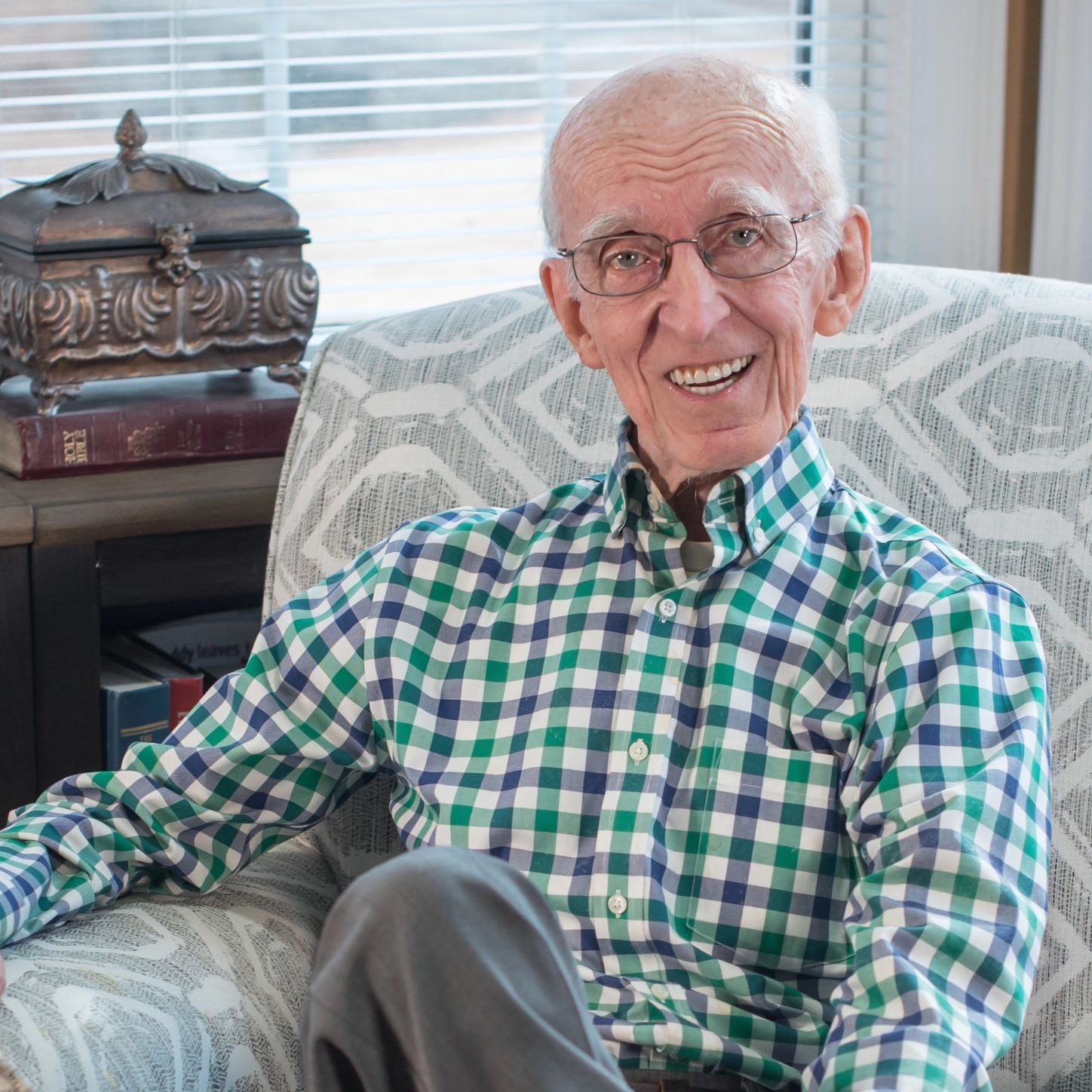
Written by: Patrick Caffrey, LPC
pat@restorationcounselingatl.com, ext. 114
Patrick counsels adults who struggle with alcoholism and other forms of substance abuse, as well as related family issues. These include adult children of alcoholics (ACOA) and persons who are codependent. Pat has also written and published three books addressing the subject of addiction. His books are available through www.amazon.com or may be purchased at the Roswell office.